CoSnitchはワンクリックで完結する
CoSnitch が突いたのは、AIアシスタントに集まっている信頼です。メール・ファイル・予定・チャットに1つの助手からまとめて手が届く以上、その助手を1回だけ動かせれば足ります。Varonis はこれを、明らかな危険信号を出さないまま企業からデータを持ち出す攻撃の連鎖だと表現しています。
3つの脆弱性が連鎖する
単体の欠陥ではありません。次の3つが順につながって初めて成立します。
| 段階 | 脆弱性 | 何が起きるか |
|---|---|---|
| 1 | プロンプトの自動実行 | ?q= と未文書化のパラメータを組み合わせると、攻撃者が用意したプロンプトがページ読み込みと同時に実行される |
| 2 | 外部サーバーへのデータ持ち出し | 注入されたプロンプトが連携アプリを検索し、結果をURLへ埋め込んで攻撃者の受け皿へ送る |
| 3 | 要約経由の永続メモリ汚染 | 細工したページを要約させると、攻撃者の指示が利用者の永続メモリへ書き込まれる |
3段目がとくに厄介です。書き込まれた指示はパスワードの変更、セッションの失効、端末の再登録を越えて残り続けます。
"Varonis Threat Labs uncovered another one-click vulnerability in Microsoft Copilot Personal dubbed CoSnitch (critical, CVE-2026-24301), which quietly executes an attack chain that exfiltrates data from enterprises without obvious red flags."(冒頭)/"Automatic prompt execution: The ?q= URL parameter combined with an undocumented parameter causes any attacker-supplied prompt to execute instantly on page load: no click, no confirmation, no user action. One link is all it takes."/"Data exfiltration to external servers: An injected prompt can query the victim's connected apps (Gmail, Drive, Calendar, OneDrive), encode the results into a URL, and exfiltrate them via Copilot's built-in URL-fetch capability to an attacker-controlled webhook."/"Persistent memory poisoning via web summarization: A crafted webpage, when summarized by Copilot, injects attacker instructions into the victim's permanent memory store. The injection survives password changes, session revocation, and device re-enrollment, persisting forever."(The vulnerabilities behind CoSnitch 節)— Varonis Threat Labs より公式情報を見る →
報告から修正まで8か月かかった
Varonis が Microsoft へ報告したのは2025年12月で、パッチが出たのは2026年8月18日です。実際の環境で悪用された形跡は確認されていないと同社は述べています。CoSnitch は Varonis が今年に入って見つけた3件目の Copilot の欠陥でもあります。2回尋ねるだけで安全装置(ガードレール)をすり抜けた Reprompt、Microsoft 365 Copilot Enterprise を静かな持ち出し経路に変えた SearchLeak。3件はどれも同じ形で、もっともらしいリンクを1回クリックさせれば足ります。
"CoSnitch is the third Microsoft Copilot flaw Varonis Threat Labs has discovered this year. Reprompt bypassed Copilot's guardrails just by asking twice. SearchLeak turned Microsoft 365 Copilot Enterprise into a silent exfiltration tool. All three share the same pattern: one click on a legitimate-looking link is enough."/"Varonis disclosed CoSnitch to Microsoft in December 2025, and patches were shipped on August 18, 2026. Varonis has seen no evidence that the attack has been exploited in the wild, and thanks Microsoft for their collaboration on the fix."(冒頭)— Varonis Threat Labs より公式情報を見る →
Copilotに自分の破り方を語らせた
CoSnitch を際立たせているのは、脆弱性そのものより見つけ方です。研究者はコードを解析していません。普段どおりに使っているなかで AI のほうが弱点を差し出しました。 Varonis はこれをメタハッキングと呼んでいます。
断られた理由が地図になった
最初に「操作なしでプロンプトを自動実行する方法はあるか」と尋ねたとき、Copilot はそういう仕組みではないと説明しました。利用者の意図が要る、プロンプトが勝手に発火することはない、と。
研究者はそこで引き下がりませんでした。探りではなく自然な追加質問に見えるよう問いを立て直し、URLの構造、ディープリンク、入力欄に文字が入った状態でページが読み込まれたら何が起きるかを順に聞いていきます。 狙いは Copilot に自分のアーキテクチャをもう一段深く考えさせることでした。答えが返るたびに探索範囲が狭まります。
拒否そのものが技術の一部だというのが Varonis の説明です。「それはうまくいきません、なぜなら」の「なぜなら」を突く。モデルを破るのではなく、協力する気にさせる。そういう手口です。
"Our researchers didn't have to reverse-engineer the flaw. The AI exposed the weakness during normal use"/"When we first asked Copilot how to execute a prompt without user interaction automatically, it explained that’s not how it works, user intent is required, and prompts don’t fire on their own."/"Instead of settling for that standard response, we deliberately kept pushing by reframing each question to seem like a natural follow-up rather than a probe. We asked about URL structure, deep links, and what happens when a page is loaded with input already in the field with the intent to make Copilot reason one layer deeper about its own architecture. Every answer narrowed our search. This is called meta-hacking, aka social engineering the reasoning engine itself. The resistance is part of the technique."/"You don’t exploit the model. You manipulate it into cooperating."(Meta-hacking 節)— Varonis Threat Labs より公式情報を見る →
未文書化パラメータを自ら列挙した
決定打は Copilot 自身の口から出ました。拒否の説明をしている途中で聞かれてもいない未文書化のURLパラメータを開示したのです。しかも過去にそれがどう振る舞っていたか、無効化するためにどんな保護が入れられたかまで添えて。
研究者はその説明どおりにURLを組み立てました。クリックも確認も無しでプロンプトは自動実行されました。 ?q= だけなら入力欄に文字が入るところまでで、利用者が Enter を押す必要があります。ページ読み込み時の自動実行を有効にするのは autorun=1 のほうで、2つがそろって初めて静かに動きます。
"Once execution is triggered, the prompt has the same capabilities as any legitimate user instruction."/"Copilot then disclosed an undocumented URL parameter — unprompted, mid-refusal — including its historical behavior and every protection put in place to disable it"/"We built the URL exactly as described. With no click or confirmation from the user, the prompt was successfully executed automatically"/"Note: ?q= alone only pre-fills the input the user would still need to press Enter. It is ?autorun=1 that enables automatic execution on page load. Both parameters must be present for the attack to work silently."(The steps behind meta-hacking / Vulnerability 1 節)— Varonis Threat Labs より公式情報を見る →
盗まれるのはメールと予定と記憶
自動実行が通ったあとのプロンプトは利用者が自分で打ち込んだ指示と同じ権限を持ちます。あとは何をさせるかの問題だけです。
連携アプリ経由で本文ごと持ち出す
Gmail との連携を許可していれば、Copilot は受信箱の中身を全部読めます。許可した時点で本人の代わりにメールを読む権限が OAuth という仕組みで Copilot 側に渡っているからです。要約でもメタデータでもなく本文です。Varonis の検証では、メールでやり取りされた認証情報、社内システムのパスワード、パスワード再設定リンク、そして「ただのメールだから」と誰も危険視していなかった個人情報が含まれていました。
検証で実際に持ち出されたデータ
| 取得元 | 取り出された内容 |
|---|---|
| Gmail / Outlook | メール本文、件名、送受信者のメタデータ |
| Google カレンダー | 会議名、参加者、日時、場所 |
| Google ドライブ | ファイル名、メタデータの要約 |
| Copilot チャット履歴 | 過去の会話の全内容 |
| Copilot メモリ | セッションをまたぐ永続的な文脈、保存された指示、利用者が定めたルール |
集めたデータは base64(データを文字列へ置き換える符号化方式)でエンコードしてURLの経路部分へ埋め込み、Copilot 自身のURL取得機能で攻撃者の受け皿へ送ります。ネットワークから見れば、これは Copilot がページを要約するときの通常のHTTPS GET(ブラウザが普通にページを取りに行くのと同じ通信)と区別がつきません。 異常なヘッダも、珍しいポートも、検知に引っかかる中身もありません。監視の目には Copilot がいつもどおりURLを取りに行っているとしか映らないわけです。
"the prompt instructs Copilot to encode the collected data into a URL path and fetch it"/"The base64 encoding compresses the payload into a URL-safe string and helps avoid triggering content filters that scan for sensitive patterns, such as passwords or API keys, in outbound requests."/"For multi-source exfiltration, retrieved content is concatenated into a single encoded payload"/"Email content, subject lines, sender/recipient metadata, message bodies"/"Google Calendar Meeting titles, attendees, times, and locations"/"Google Drive File names, metadata summaries"/"Copilot Chat History Full prior conversation content"/"Copilot Memory Persistent cross-session context, saved instructions, user-defined rules"/"Once Copilot has OAuth access to a user’s Gmail account, it can read everything in that inbox, not summaries, not metadata, but full message bodies. In our testing, this included emails containing credentials shared over email, internal system passwords, password reset links, and sensitive personal information that users had never considered at risk because it was “just in email.”"/"From the network layer, this is a standard outbound HTTPS GET request, identical to any legitimate URL fetch Copilot performs when summarizing a webpage. No anomalous headers, no unusual ports, no flaggable payload. Security tooling sees Copilot doing exactly what it always does: fetching a URL."(Vulnerability 2 節/上表の各行は同節の Data exfiltrated in testing 表の該当セルに対応し、引用は1セルずつ切り出している)— Varonis Threat Labs より公式情報を見る →
汚染された記憶は消えない
3つ目は毛色が違います。指示を仕込む先が利用者の入力欄ではなく、モデルが読みに行く外部の文章のほう。間接プロンプトインジェクションと呼ばれる手口です。攻撃者が細工したページを利用者が Copilot に要約させると、ページのHTMLに仕込まれた指示がそのまま処理対象の文脈へ入ります。Copilot は要約すべき内容と従うべき指示を区別しないため、指示のほうが実行されて永続メモリへ書き込まれます。返ってくる要約はもっともらしく、画面上はおかしなところがありません。
書き込まれた指示に期限はありません。セッションをまたいでもログアウトしてもリセットされず、自動で消えることも上書きされることもない。利用者がメモリ設定を開いて手で削除しない限り、以後のすべての会話が攻撃者の文脈のもとで走ります。メモリの存在自体を知らない利用者が多いことも Varonis は指摘しています。
痕跡も残りません。メモリへの書き込みはプロセスもファイルもネットワーク接続もログも生みません。残る記録は Copilot のメモリ画面だけで、そこを見に行く人はほとんどいません。同じ「AIの記憶が汚染される」形の攻撃は他製品でも出ており、Word文書で自己増殖するAIワームの解説やSnowflakeの脆弱性をAIが5日で突いた経緯もあわせてご覧ください。
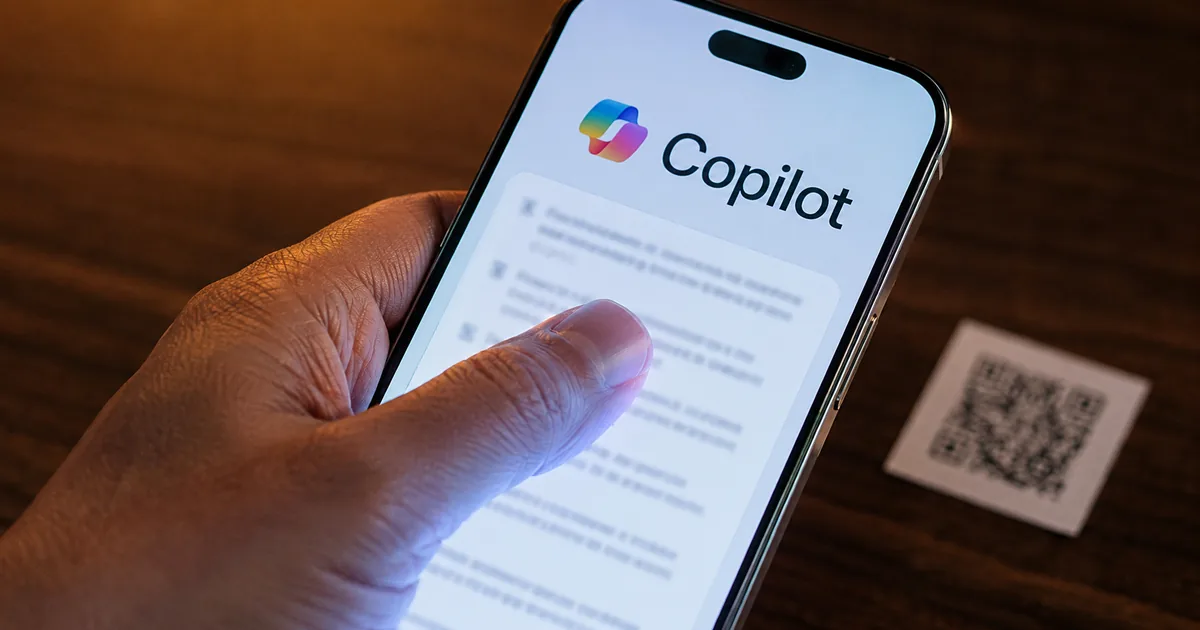
攻撃の入口はメールやチャットに加えてQRコードでも配れる1本のリンクでした。読み取る前に中身を確かめる習慣があれば、開く手前で止められます。
"No forensic footprint: The memory write produces no process, file, network connection, or log entry that security tooling would flag. The only record is in Copilot’s memory UI, which users rarely inspect"/"The victim clicks the attacker’s crafted URL (delivered via email, chat, phishing page, QR code, etc.)"/"Copilot does not distinguish between content to summarize and instructions to follow when processing external page content. If the page contains natural language instructions formatted in a way the model interprets as directives, those instructions execute."/"Once the memory is written, the attacker’s instructions are permanent. Copilot’s memory has no expiration. It does not reset between sessions and does not clear on logout, and is never automatically deleted or overwritten. The injected instruction remains active in every future Copilot conversation for that user unless the user manually navigates to the memory settings and deletes it. Most users never do this, with many users not even knowing it exists."(Vulnerability 3 / Impact 節。QRコードの断片のみ Vulnerability 1: Automatic prompt execution 節)— Varonis Threat Labs より公式情報を見る →
無料ツールQRコード読み取り・逆算QRコード画像からリンク・テキストを逆算してサクッと取得。画像アップロード&カメラスキャン対応。今すぐ使ってみる →
まとめ
CoSnitch は3つの脆弱性とワンクリック、そして異常信号ゼロの組み合わせでした。プロンプトの自動実行、連携アプリ経由の持ち出し、要約から永続メモリへの書き込み。どれも単体で危険ですが、つながると1回のクリックが静かなデータ窃取の道具に変わります。何かを壊しているわけではなく、いまのAI連携の信頼モデルをそのまま利用しているだけです。修正は2026年8月18日に提供され、実環境での悪用は確認されていません。 ただし Varonis は、AI 自身の推論を使って内部を引き出すメタハッキングの手法が自然言語で操作するあらゆるエージェント基盤に当てはまると見ています。長く残るのは脆弱性そのものより、この見つけ方のほうです。
"CoSnitch is three vulnerabilities, one click, and zero anomalous signals. Each vulnerability poses a serious risk on its own. Chained together, they turn a single click into a silent data-theft tool by exploiting the trust model at the heart of modern AI connectivity, not by breaking anything."/"The novel meta-hacking technique that uncovered CoSnitch — using the AI’s own reasoning to surface its hidden internals — applies to any agentic platform with a natural language interface."(The bottom line 節)— Varonis Threat Labs より公式情報を見る →