The Big Picture of the AMD–Anthropic Partnership
Key points of the partnership
This partnership is not a simple sale of chips but a deeper arrangement that involves investment and technical cooperation. First, let us establish what was announced and the hardware actually used.
Overview (2GW supply and $5B investment)
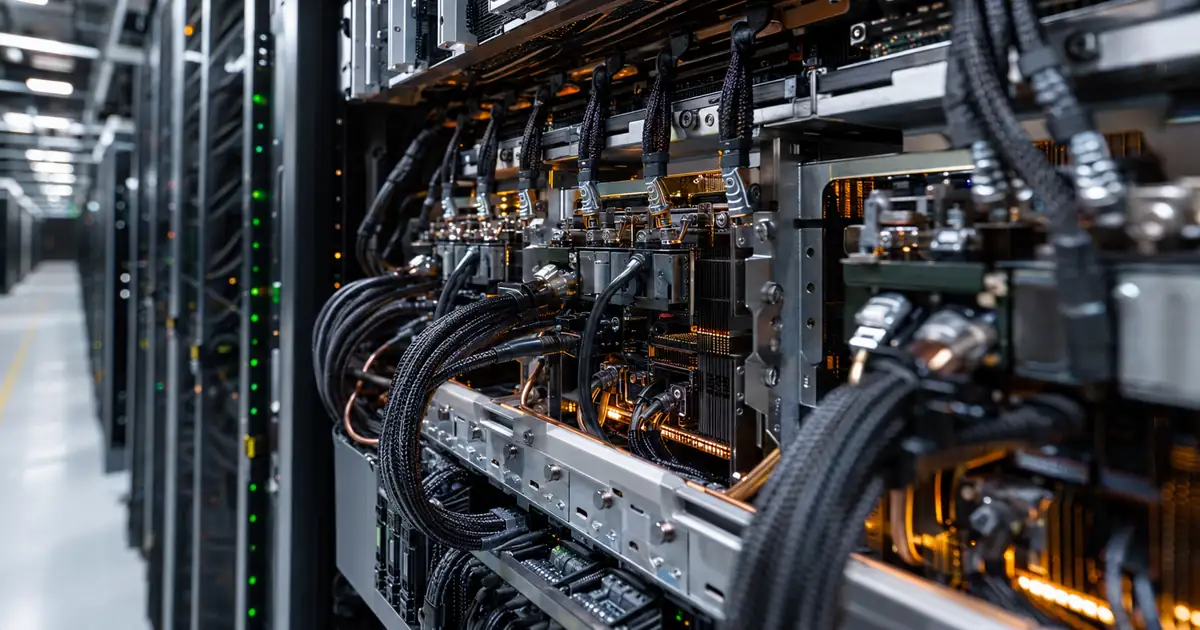
The partnership has two pillars. The first is large-scale hardware procurement: Anthropic will deploy up to 2 gigawatts of Instinct MI450 Series GPUs in AMD Helios rackscale solutions, standing up the first gigawatt in the first half of 2027.
"AMD (NASDAQ: AMD) and Anthropic today announced a strategic partnership to deploy up to 2 gigawatts of AMD Instinct™ MI450 Series GPUs in AMD Helios™ rackscale solutions, with deployment of the first gigawatt beginning in the first half of 2027." — from AMD's official newsroom
The gigawatt is a unit of electric power, often used as a measure of the scale of AI data centers. A scale of 2 gigawatts corresponds to substantial compute resources to power the training and serving of large volumes of Claude. The other pillar is AMD's investment in Anthropic.
"AMD has committed to make a strategic equity investment of up to $5 billion in Anthropic." — from AMD's official newsroom
The side supplying the chips invests in the company it supplies. This two-way relationship makes the partnership more than a mere transaction.
The chip used (MI455X within the MI450 Series)
There is a small but important point here. "MI450" is the name of the product series; what is actually deployed is the MI455X GPU that belongs to that series. Reporting often abbreviates it as "MI450," but strictly it refers to the MI455X within the MI450 Series.
"Anthropic will deploy AMD Helios rackscale solutions featuring AMD Instinct™ MI455X GPUs, part of the AMD Instinct MI450 Series." / "This deployment builds on Anthropic's existing use of AMD Instinct™ MI355X GPUs." — from AMD's official newsroom
Also, this deployment is not a start from zero. Anthropic already uses AMD's MI355X GPUs, and this partnership is an expansion along that line. Because there is an existing operational track record before the scale-up, it is not a bet on entirely unknown hardware.
The Aim of the Partnership (Diversifying NVIDIA Dependence)
What each side gains
Why did the two companies form such a deep partnership? Behind it is the current concentration of AI infrastructure on NVIDIA. Here we look at the aim and the substance of the mutual cooperation.
Infrastructure diversification (vs. NVIDIA)
The market for AI GPUs is overwhelmingly held by NVIDIA, and frontier AI companies depend heavily on its supply. This partnership can be seen as a move by Anthropic to broaden its compute procurement beyond NVIDIA and lower supply risk. Building a structure that is not at the mercy of a single supplier is a vital challenge for an AI company.
For AMD too, a large-volume supply to a frontier AI company becomes proof that its GPUs can withstand front-line use. It is a partnership in which both companies' calculations align.
Mutual cooperation (Claude optimizes ROCm, AMD adopts Claude)
The partnership does not stop at buying and selling hardware. The companies will use Claude to optimize workloads for AMD Instinct and to accelerate development of ROCm (AMD's GPU software base), and AMD will broadly adopt Claude across its engineering.
"The teams will use Claude to optimize workloads for AMD Instinct GPUs and accelerate ROCm software development." / "AMD will also broadly adopt Claude across its engineering and product development teams." — from AMD's official newsroom
Against NVIDIA's software base (CUDA), AMD's ROCm is still considered developing. The picture of pouring Claude into it to accelerate development shows an intent to challenge NVIDIA on both hardware and software. For Anthropic's product Claude, see also What Is Claude (Anthropic's generative AI).
The "Circular Financing" View and Caveats
Along with expectations, the partnership has points to view with care. Here we organize the reported "circular financing" view and how to separate official announcements from secondary reporting.
The circular-financing structure (analysts' remark)
Relationships like this one, where "the investee buys the investor's product," are increasing in the AI industry and are often called "circular financing." Reporting notes a cycle of funds in which AMD invests in Anthropic, and Anthropic in turn buys AMD's GPUs in large volume. However, this is a remark by analysts and reporting, not something AMD's official announcement states.
Such structures can become targets of criticism that demand is being manufactured. On the other hand, there is also an aim to stabilize a long-term relationship by binding funds and technology together, and views are divided.
Separating official announcements from secondary reporting
What to watch when reading is the source of the details. Explanations such as "the investment is linked to milestones" appear in secondary reporting and are not stated in AMD's official text. What the official announcement states is up to the "up to $5 billion" ceiling; the details of any conditions go beyond the range of verifiable primary information.
When quoting figures or conditions, it is safest to separate what is written in the official announcement from interpretations added by reporting. This article too is organized around facts that can be confirmed officially.
Conclusion
Finally, let us organize the meaning of this partnership. The AMD–Anthropic partnership symbolizes a shift in AI infrastructure from an NVIDIA-dominant world toward multiple poles. The scale of up to 2 gigawatts of supply and up to $5 billion of investment shows both companies' seriousness.
At the same time, points to view carefully remain—such as the circular-financing view and the fact that the details of the investment conditions are not disclosed officially. Because trends in AI infrastructure can affect the cost and availability of generative AI including Claude, the course of such large partnerships is worth continued attention. Relatedly, see also What Is Claude (Anthropic's generative AI).
Official announcements from overseas companies are often published in English and take effort to read through accurately. When you want to turn an English web page into a form that is easy to read, the following tool helps.