Where GPT-5.6 can be used now
The short answer first: general availability has already started. When this article first went up on June 27, 2026, GPT-5.6 was still in limited preview. That has changed.
General availability began on July 9, 2026
On July 9, 2026, OpenAI released the GPT-5.6 family as the general availability that followed the limited preview. It became usable across ChatGPT, Codex, and the OpenAI API, with the rollout starting globally and widening over the following 24 hours.
The three tiers are laid out as well. Sol is the flagship, Terra is a lower-cost model with performance competitive with GPT-5.5, and Luna is the fastest and most affordable. The number identifies the generation, while Sol, Terra, and Luna are described as durable capability tiers that advance on their own cadence.
Pricing has been revised since launch. On July 30, 2026, Luna was cut by 80% and Terra by 20%. Performance, pricing, and how to choose between the three models are covered in the GPT-5.6 Sol, Terra, and Luna explainer.
GPT-5.6 spans three model tiers: Sol, our flagship; Terra, a lower-cost model with performance competitive with GPT-5.5; and Luna, our fastest and most affordable model. The number identifies the generation, while Sol, Terra, and Luna are durable capability tiers that can advance on their own cadence. / GPT-5.6 is available starting today across ChatGPT, Codex, and the OpenAI API. The rollout is starting globally now and will continue gradually toward full availability over the next 24 hours. / Update on July 30, 2026: OpenAI reduced the price of GPT‑5.6 Luna by 80% and GPT‑5.6 Terra by 20%. — From the description of the three tiers, the start of general availability and how it rolls out, and the July 30 price cut
In ChatGPT it shows up as "reasoning depth"
This is the confusing part. In standard ChatGPT conversations you do not select GPT-5.6 by name. It is assigned to reasoning levels.
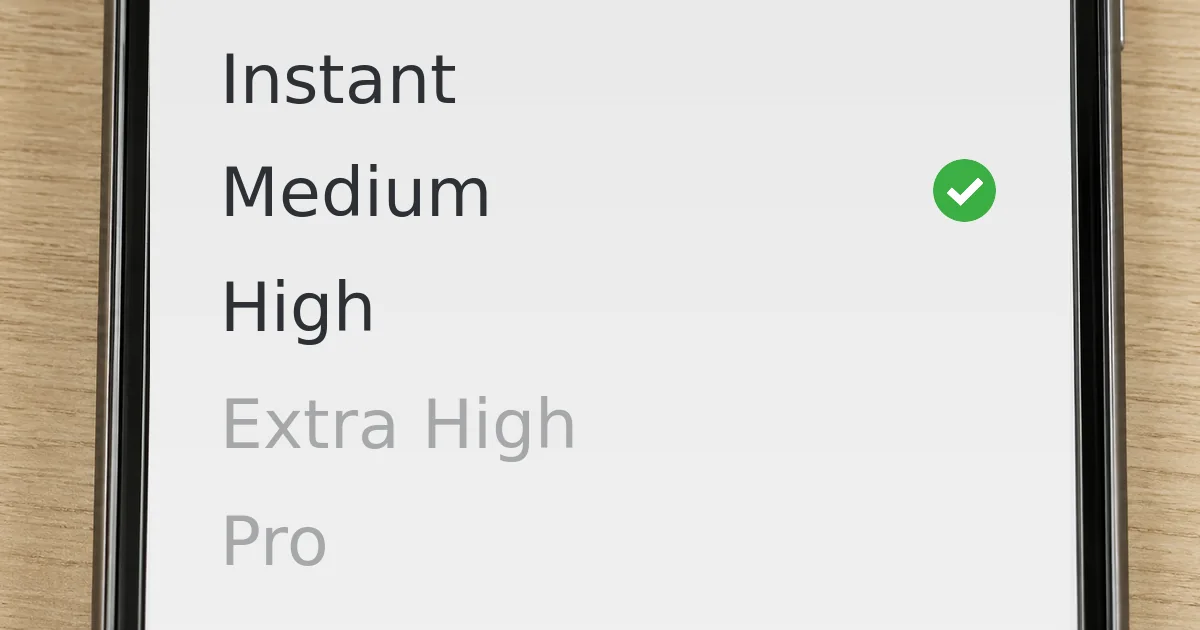
GPT-5.5 Instant remains the default for fast responses. On top of that, Medium, High, and Extra High map to GPT-5.6 Sol, and Pro maps to GPT-5.6 Sol Pro. On eligible plans, ChatGPT can also raise its reasoning automatically for complex requests, which shows up in the model picker as Instant switching to Medium. That automatic switching can be turned on or off in settings.
Here is the range by plan.
GPT-5.6 options in standard ChatGPT conversations (per the official help center)
| Plan | Medium & High | Extra High | Pro |
|---|---|---|---|
| Plus | Included | Not included | Not included |
| Pro | Included | Included | Included |
| Business | Included | Included | Included |
| Enterprise | Included | Included | Included |
| Free & Go | Not included | Not included | Not included |
Logged-out users cannot access GPT-5.6 Sol. In Business and Enterprise workspaces, admins may control which models members can use.
GPT-5.5 Instant remains the default for fast, everyday responses. GPT-5.6 Sol now powers the Medium, High, and Extra High reasoning options on eligible plans, while GPT-5.6 Sol Pro powers Pro. / On eligible paid plans, ChatGPT can automatically use more reasoning for complex requests. In the model picker, this appears as Instant switching to Medium. Select Configure in the model picker to turn automatic switching on or off. / The table below shows the GPT-5.6 options available in standard ChatGPT conversations. GPT-5.5 Instant is not shown because it remains the default model. / Plus Included Not included Not included / Free and Go Not included Not included Not included / Logged-out users do not have access to GPT-5.6 Sol. In Business and Enterprise workspaces, admins may control which models workspace members can use. — From how it appears in ChatGPT, automatic switching, the Availability by ChatGPT plan table, and the limits on who can use it
Work, Codex, and the API give you all three models
The other routes work differently from standard conversations. GPT-5.6 Terra and GPT-5.6 Luna are not selectable in standard ChatGPT conversations.
Elsewhere, all three are available. ChatGPT Work gives Sol, Terra, and Luna to Plus, Pro, Business, and Enterprise. Codex gives Terra to Free and Go, and Sol, Terra, and Luna to Plus and above. The OpenAI API offers all of Sol, Terra, and Luna.
Codex has version requirements. The ChatGPT desktop app (Codex mode) needs 26.707.30751 or later, and the Codex CLI (the command-line version) needs 0.144.0 or later.
On regions, there is no GPT-5.6-specific country list: ChatGPT access follows ChatGPT's supported countries and territories, and API access follows the API's.
GPT-5.6 availability by route (per the official help center)
GPT-5.6 is gradually rolling out to eligible ChatGPT plans. If you do not see GPT-5.6 Sol in the ChatGPT model picker, it may not be available for your account yet. / To access GPT-5.6 in Codex, use one of these minimum versions: / ChatGPT desktop app (Codex mode): 26.707.30751 / Codex CLI: 0.144.0 / GPT-5.6 Terra and GPT-5.6 Luna are not selectable in standard ChatGPT conversations. / GPT-5.6 does not have a separate country list. ChatGPT access follows the ChatGPT supported countries and territories, and OpenAI API access follows the OpenAI API supported countries and territories. / Work in ChatGPT Sol, Terra, and Luna for Plus, Pro, Business, and Enterprise / Codex Terra for Free and Go; Sol, Terra, and Luna for Plus, Pro, Business, and Enterprise / OpenAI API Sol, Terra, and Luna — From the gradual rollout, the Codex version requirements, availability by route including the Work/Codex/API table, and how regions are handled
What happened before general availability
It is ordinary to use now, but that was not true right after launch. The sequence itself says something about the shape of the AI industry today.
It started as a limited preview at the US government's request
When GPT-5.6 first went out, the only people who could use it were a small group of trusted partners and organizations shared with the government, through the developer API and Codex. There was no way to reach it from everyday ChatGPT.
The reason was a request from the US government. OpenAI explained that it was starting with a limited preview for a small group of trusted partners whose participation had been shared with the government, before releasing more broadly.
During the preview, GPT-5.6 models will initially be available through the API and Codex to a select group of trusted partners and organizations. / At their request, we are starting with a limited preview for a small group of trusted partners whose participation has been shared with the government, before releasing more broadly. — From the scope of availability during the preview and the reason for it
The executive order behind it, and OpenAI's position
Underneath this sits a new government framework. Executive Order 14409, signed on June 2, 2026, directs agencies to design a voluntary framework with AI developers. Under it, a designated "covered frontier model" can be made available to the government for up to 30 days before the developer plans to release it to other trusted partners. The same section states explicitly that it does not create a mandatory government licensing, preclearance, or permitting requirement for developing, publishing, or distributing AI models.
OpenAI was clear that it opposed making this arrangement permanent: it did not believe this kind of government access process should become the long-term default. In practice the limited preview ended within weeks and moved to general availability. The "within the coming weeks" outlook stated when this article first went up is exactly what happened.
Official announcements tend to be long English documents, and reading the original is the surest way to track changes in availability. Converting the page to Markdown preserves the heading and table structure, which makes later diffs easier to check.
We don’t believe this kind of government access process should become the long-term default. / We believe in broad access, and we plan to make GPT-5.6 Sol, Terra, and Luna generally available in the coming weeks. — From its opposition to making the government-mediated process permanent, and the plan for general availability
(b) design a voluntary framework with AI developers through which developers would be able to: / (ii) provide the Federal Government with access to covered frontier models, subject to appropriate confidentiality, cybersecurity, insider-risk, and intellectual-property protection, use, and nondisclosure requirements, for a period of up to 30 days before they plan to release such models to other trusted partners; and / (c) Nothing in this section shall be construed to authorize the creation of a mandatory governmental licensing, preclearance, or permitting requirement for the development, publication, release, or distribution of new AI models, including frontier models. — From the instruction to design a voluntary framework, the up-to-30-day advance access, and the statement that no mandatory licensing is created
Compared with the Anthropic Fable 5 / Mythos 5 suspension
GPT-5.6's limited release was not a one-off. Around the same time, Anthropic's newest models also became unusable through US government involvement. Setting the two side by side makes the pattern visible.
Fable 5 and Mythos 5 were stopped by a US order
On June 12, 2026, Anthropic stopped its newest models — Fable 5 and Mythos 5 — worldwide under a US export control directive. What the order required was cutting off access for every foreign national, inside or outside the United States. Anthropic's own foreign-national employees were included. The net effect, as Anthropic put it, was that it had to abruptly disable both models for all customers to stay compliant.
Anthropic objected, arguing that finding one narrow potential jailbreak — a trick that slips past an AI's safety limits — should not be cause for recalling a commercial model deployed to hundreds of millions of people. Only Fable 5 and Mythos 5 were affected; other models were not. The export controls were lifted on June 30, 2026, and Fable 5 returned globally the next day, July 1. The full sequence is covered in the Claude Fable 5 restoration article.
The US government, citing national security authorities, has issued an export control directive to suspend all access to Fable 5 and Mythos 5 by any foreign national, whether inside or outside the United States, including foreign national Anthropic employees. / However, we disagree that the finding of a narrow potential jailbreak should be cause for recalling a commercial model deployed to hundreds of millions of people. / Access to all other Anthropic models will not be affected. / The net effect of this order is that we must abruptly disable Fable 5 and Mythos 5 for all our customers to ensure compliance. — From the basis for the suspension, Anthropic's objection, the scope of impact, and the disabling of both models for all customers
Access to Claude Fable 5 and Mythos 5 is now restored. / As of today, June 30, the export controls on Fable 5 and Mythos 5 have been lifted. / Fable 5 will be available starting tomorrow, Wednesday, July 1, to users globally on the Claude Platform, Claude.ai, Claude Code, and Claude Cowork. — From the date the export controls were lifted and the resumption of Fable 5
The shared thread: access control in the name of security
What the two share is this: in the name of national security, the government is controlling who can access the most capable AI. Neither was stopped for being weak. The opposite — because these models are highly capable, and powerful even in areas like cyberattacks, who gets them and when became something to manage.
The form was opposite. OpenAI's was a "before" approach that narrows the audience ahead of release, with an exit in sight: general availability weeks later. Anthropic's was an "after" approach — already public, then ordered to stop immediately.
For users, GPT-5.6 read as "usable in a little while," while Fable 5 read as "it was working, then suddenly stopped." Both have since been resolved, but the structure that produced them is still in place.
The two companies' access controls, contrasted (at the time)
Conclusion: what you can use comes down to plan and route
The current answer is simple. GPT-5.6 is generally available. If you cannot use it, the reason is not regulation — it is your plan and your route.
Check in this order. For standard ChatGPT conversations you need Plus or above; Free and Go are excluded. Next, if you want Terra or Luna, you need ChatGPT Work, Codex, or the API. And Codex will not show it if your app or CLI version is too old. If it still does not appear, the gradual rollout may simply not have reached your account yet.
There is also something worth keeping from how the launch went. A regulatory or security decision can delay a release, or stop one abruptly. Get familiar with how to choose ChatGPT's models and the overall Claude lineup, and keep important work runnable on two or more models. That preparation has lost none of its value now that GPT-5.6 is ordinary to use.