Why wine inventory is hard in a restaurant
Most explanations of restaurant inventory follow the same flow: count what remains, record it, decide how much to order. As a procedure that is correct. Applied to wine, it stops adding up partway. The reason lies in the nature of the product.
Three causes of wine stock not adding up
A different vintage is a different item
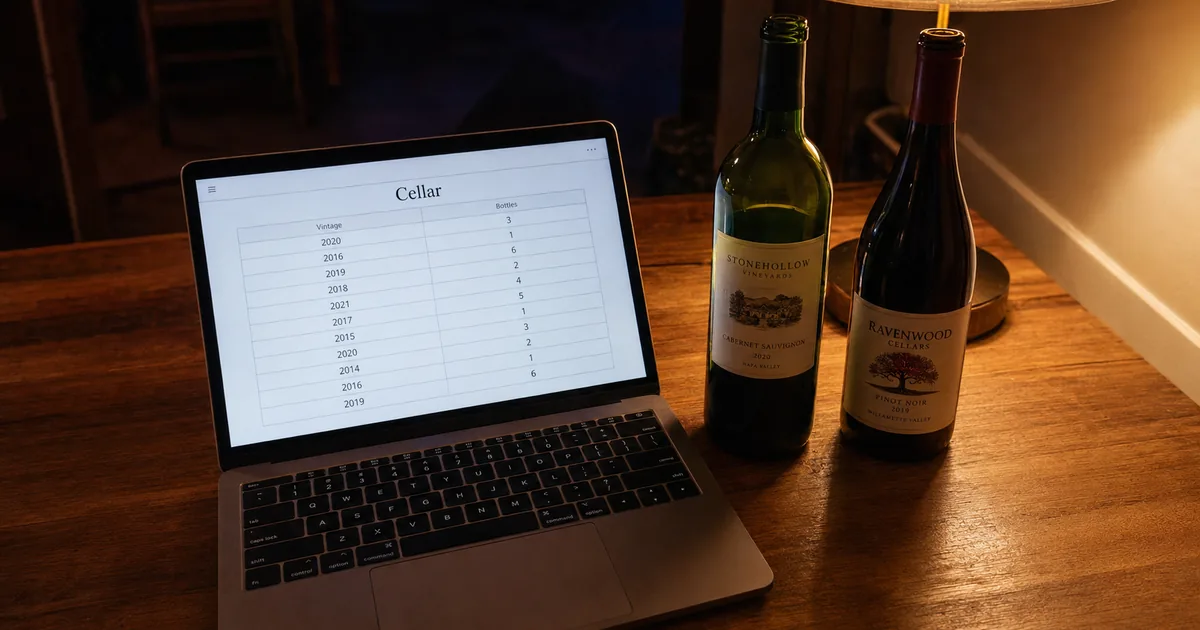
Vegetables and meat can be counted together as one line item. Wine cannot. For the same label from the same producer, 2018 and 2020 differ in cost, in price, and in drinking window. Hold only the wine name in your sheet and those two collapse into one row, and the cost calculation stops working.
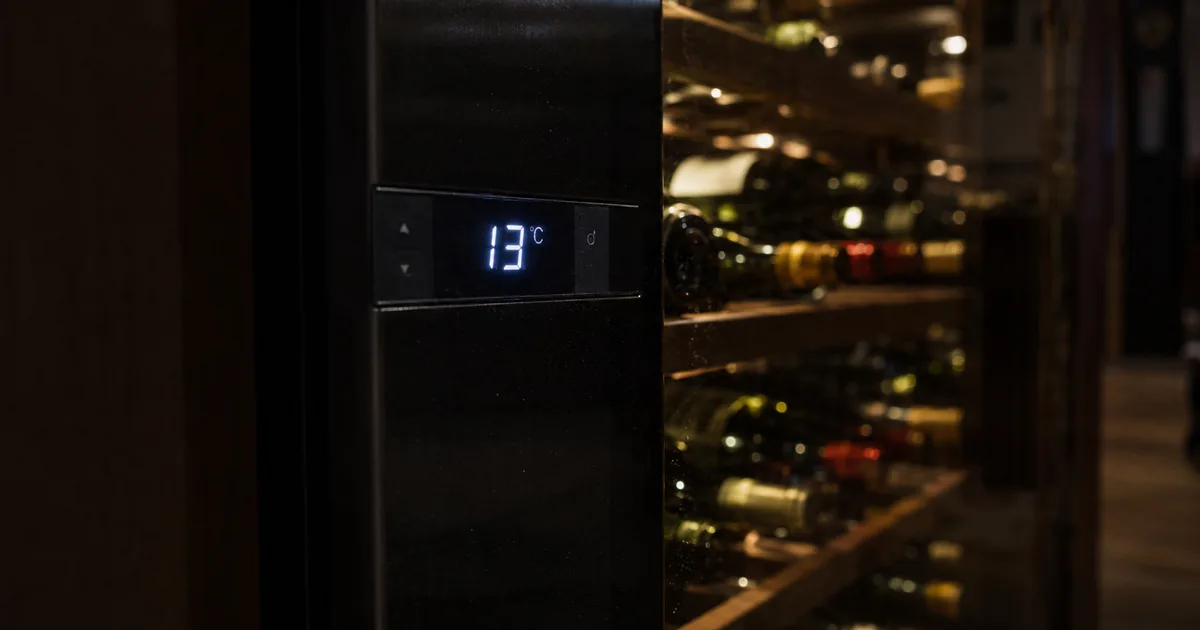
The awkward part is that they are hard to tell apart on sight. Label design barely changes from year to year, so missing the vintage when pulling a bottle off the shelf means serving the expensive one at the cheap price. How to think about drinking windows by vintage is covered in "When Is Wine Ready to Drink? How Aging Works and How to Decide to Drink or Cellar," and cellar temperature where the door opens constantly during service in "What Temperature Should a Wine Cellar Be? Storage Versus Serving."
Bottle and glass service deplete differently
Sold by the bottle, stock drops by one. Sold by the glass, one bottle splits into several servings, and when service ends you are holding a bottle with a quarter left. Whether you count that as one, as zero, or as 0.25 changes the cost-ratio figure.
What to settle first is whether stock comes off at opening or when the bottle is finished. Either is fine. But unless it is consistent across the restaurant, every count produces a different answer. Opened bottles are covered in detail in the next section.
The cost per bottle is heavy
Food loss usually stays within a few hundred yen per item, while wine runs from thousands to tens of thousands of yen per bottle. The weight of "one bottle does not match" is different from other stock.
Physical constraints on the cellar bite here. It may not hold the stated capacity, and a bottle temporarily parked outside the shelf for lack of space is exactly the bottle that drops off the sheet.
The stated capacity of a wine cellar is usually based on Bordeaux-shaped bottles, so when you try to load wider bottles such as Burgundy or Champagne shapes, cases arise where it does not hold as many as the specification says.
The stated capacity of a wine cellar is usually based on Bordeaux-shaped bottles, so when you try to load wider bottles such as Burgundy or Champagne shapes, cases arise where it does not hold as many as the specification says. — From a wine cellar specialist retailer's column
How to run wine stocktaking
Stocktaking is the work of matching recorded stock against the physical bottles. With wine, unless you settle what counts as one unit, different people count differently.
Running a stocktake
Stocktaking is unavoidable for tax purposes
Separate from tracking cost ratios, stocktaking has a tax requirement behind it. In Japanese income tax filing, the inventory value as of January 1 of the year is treated as the opening figure and the value as of December 31 as the closing figure. Settling the inventory value at least once a year is not optional.
Do it only once a year and a full year of drift arrives at once, with no way to trace the cause. Run it monthly and you can at least narrow the problem to the month it appeared.
Enter the inventory value of goods and similar items as of December 31 of the year being filed.
Enter the inventory value of goods and similar items as of December 31 of the year being filed. — From the explanation of closing inventory of goods (products)
Enter the inventory value of goods and similar items as of January 1 of the year being filed. — From the explanation of opening inventory of goods (products)
Count in units of "wine plus vintage"
What should one row of the sheet represent? The wine name alone is not enough. One row per combination of wine and vintage is the practical minimum unit. The 2018 and the 2020 of the same label sit as separate rows.
The row count grows, but each added row represents a genuinely different product at a different cost. Merge them and at the costing stage you cannot decide which value to use. Carrying the producer name as a column as well prevents mixing up similarly named wines. Column design itself is covered in "Wine Inventory in Excel: Column Design and Where It Breaks."
How to count opened bottles
Any restaurant pouring by the glass ends service holding opened bottles. Handling them as stock resolves more easily when you decide it together with the service limit.
The raw material for that is data on how long an opened bottle actually lasts. In an experiment Suntory ran in 2015, four people tasted on the day of opening, the next day, after three days, after a week, and after two weeks, scoring the elements of flavor. The conclusion was that you do not need to finish a bottle that day: a casual wine keeps well for three days, a powerful one for a week.
Set a blanket limit of "two days after opening" and you are discarding powerful reds while they are still fit to pour. Split the limit by the character of the wine and both waste and quality incidents fall. Storage is refrigerated as a rule; in the same experiment, the room-temperature bottle at two weeks came across as spoiled.
★★ A casual wine keeps well for three days, a powerful one for a week! ★★
For the method, four members tasted "on the day of opening, the next day, after three days, after a week, and after two weeks," scoring the elements of flavor out of a maximum of five points to track the change over time./We tried room-temperature storage for the sake of this experiment, but once a bottle is opened we think it should as a rule be kept refrigerated. — From the descriptions of the experimental method and the storage method
Sharing wine stock across staff
Managing alone works from a personal note, but in a restaurant the floor and the back of house are different people touching the same stock. That is where systems diverge.
How each sharing method breaks
Where spreadsheets break under multiple people
A spreadsheet is flexible for one person, and columns are yours to add. It breaks the moment you share it. winecode, a wine management service for restaurants, points out that the table balloons as wine increases, requiring scrolling on every search, and that on top of the update burden, version mismatches between staff happen constantly.
Once versions fork, the sheet stops being a record of fact and becomes somebody's memory. A file where nobody can tell which copy is current is useless in the moment you want to check stock while serving a customer.
The more wine you have, the more the sheet balloons, and you scroll endlessly every time you search. On top of the update burden, version mismatches between staff happen constantly.
The more wine you have, the more the sheet balloons, and you scroll endlessly every time you search. On top of the update burden, version mismatches between staff happen constantly. — From the section listing the problems with spreadsheet management
Keep a record of who moved what and when
When several people touch the same stock, you get the discrepancy where "the count I reduced is back." Whether you can trace that is the fork when choosing a shared service.
winecode manages by group, gives every invited staff member real-time access to the same data, and states that all changes are recorded automatically as a chronological history. When a stocktake shows a gap, a history lets you narrow down when the drift started. Without one, all that remains is the fact of the gap.
All changes are automatically recorded as a chronological history.
Wine is managed by group, and multiple staff can operate it simultaneously./All changes are automatically recorded as a chronological history. — From the explanation of group management and history
Cut the effort of inviting people
Where staff turn over, starting and stopping sharing happens often. If the flow of creating an account and setting permissions is heavy, sharing quietly stops and everyone returns to paper. That is the common failure.
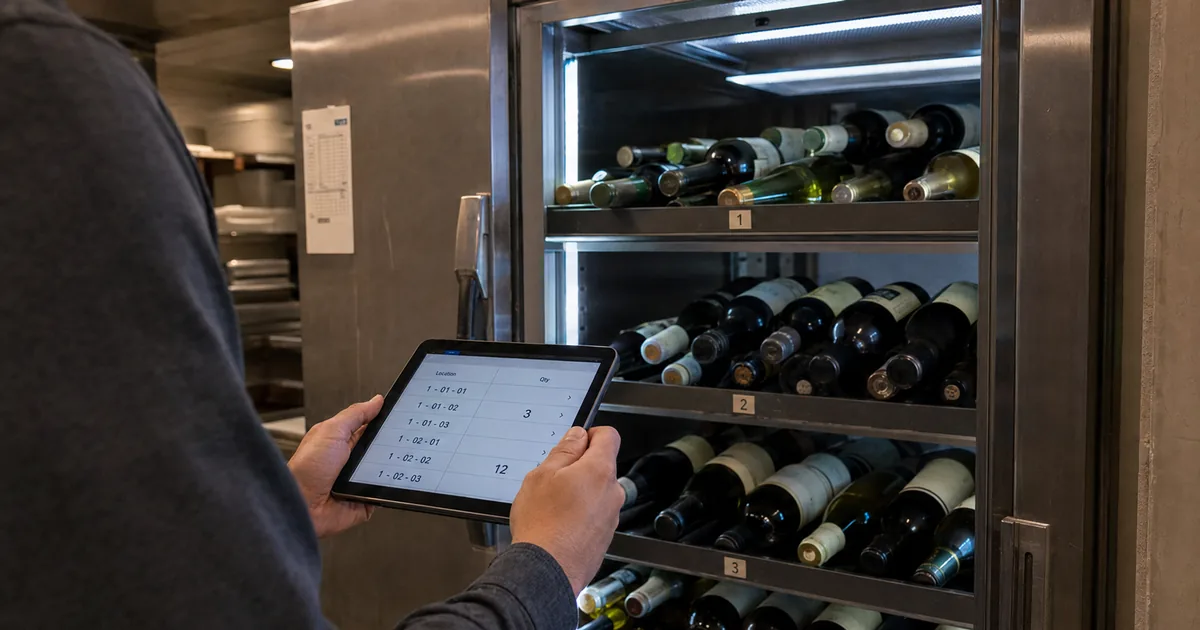
Shelvin shares cellar information by showing the other person a QR code. Its official site shows restaurants sharing stock in real time across all employees. Note, though, that on the pricing table team sharing sits on the Premium side.
QR code invitations: simply show the other person a dedicated QR code and they can register easily and share wine cellar information.
QR code invitations: simply show the other person a dedicated QR code and they can register easily and share wine cellar information. — From the sharing and invitation feature description
Team and store sharing: share stock in real time across all shop employees. Grasp back-of-house stock smartly even while serving customers./Premium ¥500 / month Team sharing — The first is from "Main features," the second from the Premium entries under "Pricing"
Choosing a wine inventory system
General inventory systems and wine-specific services are good at different things. Which you choose depends on where wine sits in your revenue.
General systems versus wine-specific ones
A general restaurant inventory system's strength is seeing all your ingredients through one system, with ordering and cost-ratio management handled together. Its weakness is that wine-specific fields like vintage and shelf position end up in a free-text notes column.
Wine-specific services are the reverse. They cannot see anything but wine, but they carry vintage, region, and shelf position as fields from the start. If wine is a revenue pillar with many bottles and many labels, go specific; if you stock a handful of labels, go general. This part does not need agonizing over.
Three things to settle before adopting one
Whichever you choose, settling a few things first reduces rework after adoption.
What to settle before adopting
If you want to cut the registration effort itself, label-photo auto-entry for wine name and vintage is available. Since AI reading involves inference, though, how you build in the post-registration check needs deciding separately. That is covered in "How Accurate Is AI Wine Label Scanning? What It Does and Where It Stops."
Some services also chart the breakdown of your stock, the total plus the composition by type and region. Whether purchasing has skewed too far toward red, whether regions have gone lopsided. Judgments like these come faster from a chart than from working down a list.
Inventory reports: view the total number of wines you own, along with the breakdown by type (red, white, sparkling, and so on) and by region, visually through charts and similar features.
Inventory reports: view the total number of wines you own, along with the breakdown by type (red, white, sparkling, and so on) and by region, visually through charts and similar features. — From the inventory report feature description
Summary
Restaurant wine stock stops adding up not because the counting is sloppy but because wine does not fit the assumptions behind generic inventory management. The same label in a different vintage is a different item, by-the-glass service leaves fractions, and a single bottle out of place equals dozens of food portions.
Stocktaking is required at least annually for tax purposes, with Japanese income tax filing using the inventory values as of January 1 and December 31. Running it once a year means a full year of drift arriving together, so running monthly and staying able to trace causes finishes faster overall. Count in units of wine plus vintage, and handle opened bottles together with the service limit. Making those two consistent across the restaurant removes most of the variation between people counting.
On sharing, a spreadsheet stops functioning as an inventory record the moment versions fork. Everyone seeing the same data, and a record of who moved what and when, are the conditions for tracing gaps at stocktaking.
If you carry many bottles and many labels and want the floor and the back of house looking at the same stock, starting from Shelvin (App Store), which records shelf position and shares by QR code, makes it easier to see where your current workflow is jamming.