Storage temperature and serving temperature are different things
Most of the confusion around temperature settings comes from two different temperatures being discussed as if they were one. Start by separating them.
The two temperatures
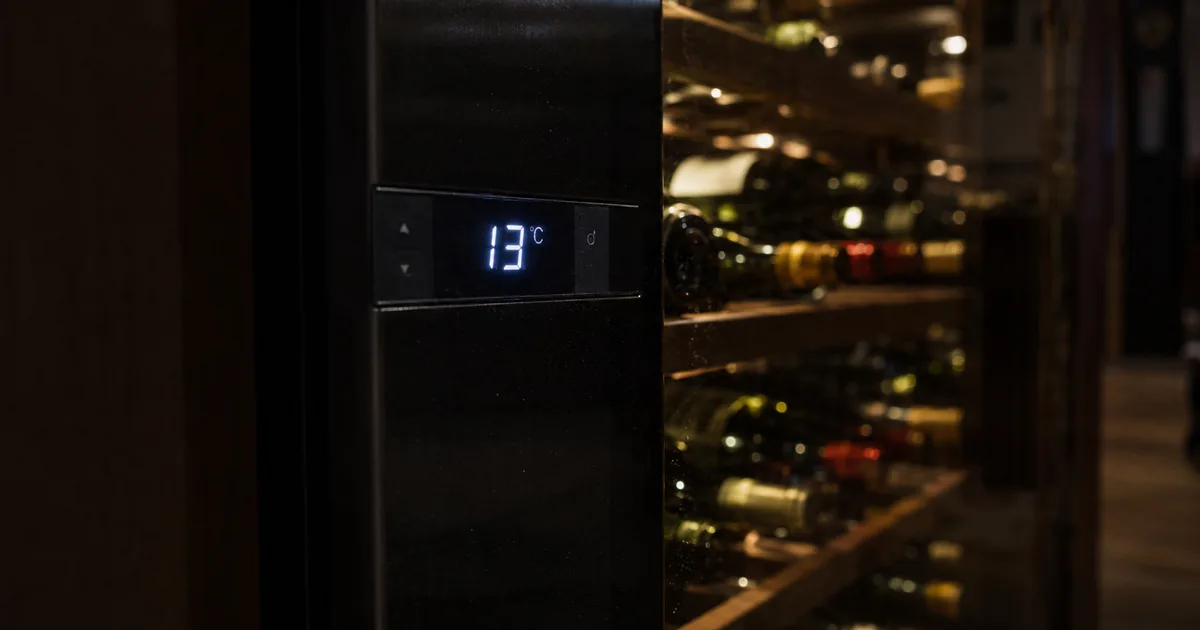
Around 13 degrees for long-term storage
If storage is the goal, set around 13 degrees Celsius. Forster Japan, a wine cellar manufacturer, explains that maintaining an aging temperature of around 13 degrees matters when you want to store wine safely over the long term. The same company gives 12 to 15 degrees as the ideal for a storage environment.
This figure is not "the temperature wine tastes good at" but "the temperature at which change stays gentle." It sits almost exactly in the middle of that 12-to-15 band. Hold the range, the company explains, and you prevent the cork drying and the flavor degrading while still enjoying the character the wine originally has.
When you want to store wine safely and over the long term, it is important to maintain an aging temperature of around 13 degrees Celsius.
When you want to store wine safely and over the long term, it is important to maintain an aging temperature of around 13 degrees Celsius./A temperature of 12 to 15 degrees and humidity of 60 to 70 percent is ideal, and holding this prevents the cork drying and the flavor degrading, letting you enjoy the character the wine inherently has. — The first passage is from "points beginners should know," the second from "how to manage appropriate temperature and humidity"
Serving temperature varies widely by type
The temperature you pour at, by contrast, splits by type. Forster Japan gives 16 to 18 degrees for red, 7 to 9 for white, and 5 to 8 for sparkling as the generally cited ideals.
Line those up against 13 degrees of storage and you can see that red moves up while white and sparkling move down. Nothing comes out of the same cellar ready to drink as is. Red wants a little time at room temperature; white and sparkling want the refrigerator or an ice bath before pouring.
Adjusting from 13 degrees of storage
Generally, 16 to 18 degrees for red wine, 7 to 9 degrees for white wine, and 5 to 8 degrees for sparkling are considered ideal.
Generally, 16 to 18 degrees for red wine, 7 to 9 degrees for white wine, and 5 to 8 degrees for sparkling are considered ideal. — From the serving temperature explanation under "points beginners should know"
Watch humidity at the same time
Getting the temperature right does not satisfy the conditions on its own. Mottox lists four ideal storage conditions: 12 to 15 degrees Celsius, 70 to 75 percent humidity, no temperature variation or vibration, and no exposure to ultraviolet light.
Low humidity dries and shrinks the cork, and air enters through the gap. However precise the temperature setting, a dry environment lets degradation proceed by another route. The full picture of storage conditions is covered in "How to Store Wine: Temperature, Humidity, and When Bottles Need to Lie Down."
The ideal storage conditions for wine are: (1) a temperature of 12 to 15 degrees Celsius, (2) humidity of 70 to 75 percent, (3) no temperature variation or vibration, and (4) no exposure to ultraviolet light.
The ideal storage conditions for wine are: (1) a temperature of 12 to 15 degrees Celsius, (2) humidity of 70 to 75 percent, (3) no temperature variation or vibration, and (4) no exposure to ultraviolet light. — From the explanation of storage conditions
Running a single cellar
Dual-zone cellars exist, but most homes have one unit. The following assumes a single setting.
Fix it at the storage temperature and adjust after taking bottles out
Set the cellar to the storage temperature. That is the easiest way to run it, and the reason is how easily each direction adjusts.
Chilling arrives quickly. Warming takes time. Bringing white or sparkling from 13 degrees down to 7 to 9 goes fast in an ice bath, and raising red to 16 to 18 happens on its own if you leave the bottle at room temperature. Both fit inside the preparation you do just before drinking.
Set the cellar toward serving temperature instead and you sit outside the storage conditions for the entire time bottles are in there. Drinking is a moment; storage is every other moment, so matching the long side is the rational choice.
If you own mostly white and sparkling
If white and sparkling dominate your collection, setting slightly lower is an option. Around 12 degrees shortens the chilling time after you take a bottle out.
That said, the ideal storage environment is the 12-to-15 range. If red shares the cellar, stop at 12 as the floor; below that you leave the ideal range altogether. Whether your collection actually skews one way is something a breakdown by type will tell you.
A temperature of 12 to 15 degrees and humidity of 60 to 70 percent is ideal, and holding this prevents the cork drying and the flavor degrading, letting you enjoy the character the wine inherently has.
A temperature of 12 to 15 degrees and humidity of 60 to 70 percent is ideal, and holding this prevents the cork drying and the flavor degrading, letting you enjoy the character the wine inherently has. — From "how to manage appropriate temperature and humidity"
Swings matter more than the setting
It is easy to fixate on hitting the set temperature exactly, but what actually bites is how small the swings are. Kirin likewise gives 13 to 15 degrees in a relatively cool place with little temperature variation as optimal, and writes that locations with high temperatures cause wine to deteriorate.
Two things move the interior temperature: opening the door, and where the unit sits. Put it by a window in direct sunlight, or where heat from a stove or refrigerator reaches it, and the interior will move whatever the dial says.
A relatively cool place with little temperature variation, at 13 to 15 degrees, is optimal. Locations with high temperatures cause wine to deteriorate.
A relatively cool place with little temperature variation, at 13 to 15 degrees, is optimal. Locations with high temperatures cause wine to deteriorate. — From the optimal wine storage techniques section
What changes between home and restaurant
The same setting produces different conditions inside depending on how often the door opens. In a restaurant the premise itself is different.
Home versus restaurant
In a restaurant, search time drives temperature
A cellar in service opens at a frequency no home comes close to. What matters there is whether staff know where the target bottle is.
Every second the door is open while someone searches is a second the interior warms. Knowing which tier and which position closes the door immediately; searching leaves it open the whole time. Repeat that through a service and setting the dial to 13 degrees loses much of its meaning. The practical side of restaurant inventory is covered in "Wine Inventory for Restaurants: Stocktaking and Sharing With Staff."
Packing tight creates temperature differences inside
Common to both home and restaurant is the problem of overpacking. Sakura Works explains that stacking wine on top of other bottles not only makes it harder to retrieve, it also makes storage at the appropriate temperature difficult.
With airflow paths gone, temperature differences between spots inside should become easier to produce. Stated capacity is only a guide, and it is safer not to run a cellar on the assumption of filling it. Leaving one tier empty also gives you working space for rotating stock. How to arrange bottles is covered in "Organizing a Wine Cellar: Shelf Zoning and Recording Position."
Stacking wine on top of other bottles lets you store more wine, but it not only makes the bottles harder to retrieve, it also makes storage at the appropriate temperature difficult.
Stacking wine on top of other bottles lets you store more wine, but it not only makes the bottles harder to retrieve, it also makes storage at the appropriate temperature difficult. — From "CHECK 02: is the capacity one that does not reduce cooling efficiency?"
Knowing the position shortens the time the door is open
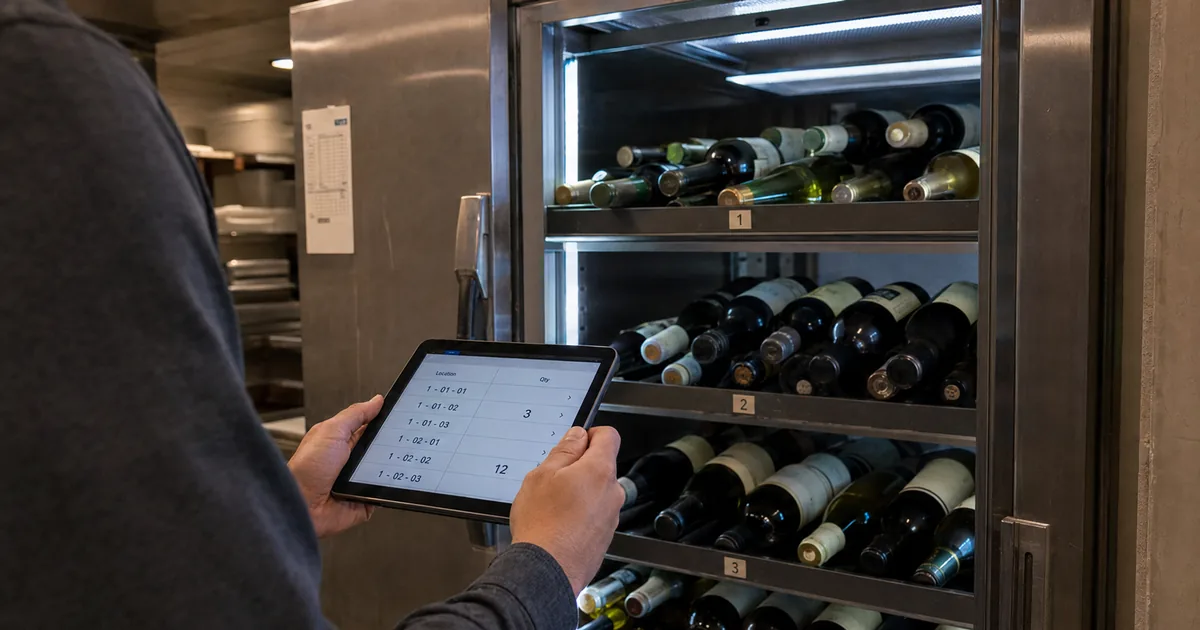
Temperature management eventually comes back to knowing what is where. Knowing the position shortens how long the door stays open, which keeps the interior temperature steadier.
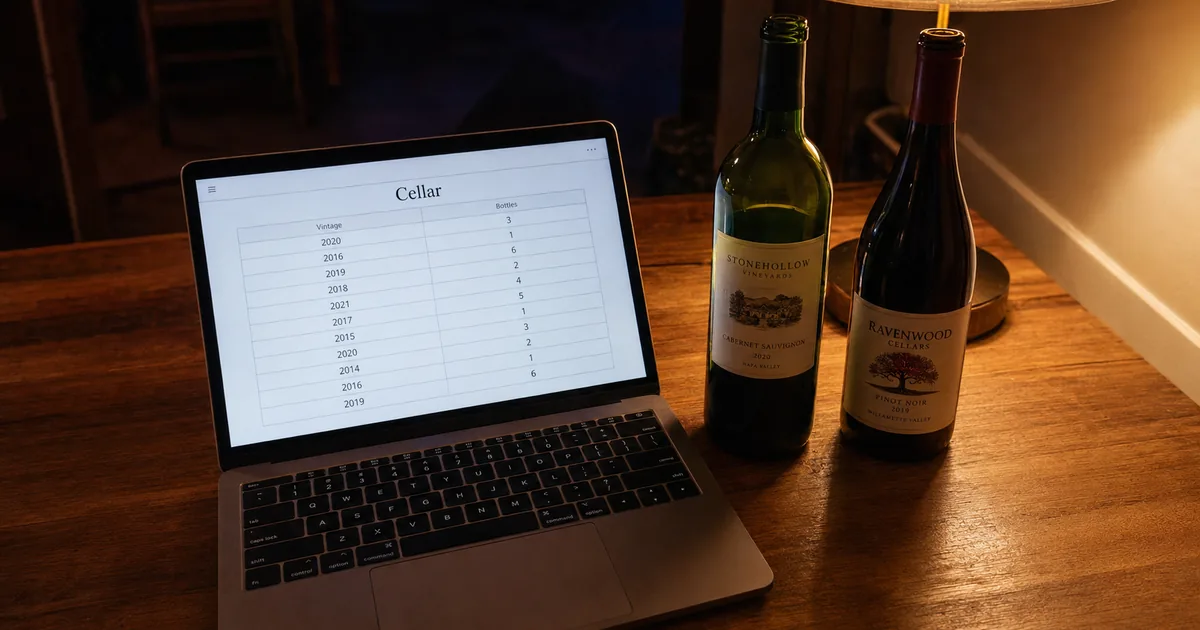
Shelvin, a wine inventory app, lets you register several cellars and keep a visual record of which wine sits on which tier of which shelf. Whether your collection skews toward red is also visible, since it charts the breakdown by type and region. That gives you something to judge a lower setting against.
Register multiple cellars and visually record which wines are located on which shelf (row/tier).
Register multiple cellars and visually record which wines are located on which shelf (row/tier)./Inventory reports: view the total number of wines you own, along with the breakdown by type (red, white, sparkling, and so on) and by region, visually through charts and similar features. — The first passage covers cellar and position management, the second the inventory report feature
Summary
Wine cellar temperature is confusing because storage temperature and serving temperature are different things. Long-term storage sits around 13 degrees Celsius, with 12 to 15 degrees and 60 to 75 percent humidity as the storage environment. Serving temperature, meanwhile, is 16 to 18 for red, 7 to 9 for white, and 5 to 8 for sparkling. The targets simply differ.
With one unit, fixing the setting at the storage temperature and adjusting after you take a bottle out is easier to handle. Chilling goes fast with an ice bath, warming takes time, and drinking is a moment while storage is every other moment. If white and sparkling dominate, dropping toward 12 degrees is an option, but with red in the same cellar, stop there.
More decisive than the setting is how small the swings are. What moves the interior is the door and the location, and in a restaurant especially, time spent searching translates directly into a temperature rise. Overpacking stops airflow and creates differences inside as well.
If you want to shorten the time the door is open and hold the temperature steadier, Shelvin (App Store), which records down to which tier a bottle is on, cuts the searching itself. According to the official pricing table, the free plan registers up to 16 bottles and includes cellar position management within that tier.
Free ¥0 Up to 16 bottles Label scanning (up to 2 per week) Cellar position management Ads shown
Free ¥0 Up to 16 bottles Label scanning (up to 2 per week) Cellar position management Ads shown — From the Free plan entries under "Pricing"