What Ending Waymo Exclusivity Actually Means
What changes and what does not
The headline reads like a breakup. What is settled is the end of exclusivity.
Exclusivity Ends, Own App Arrives
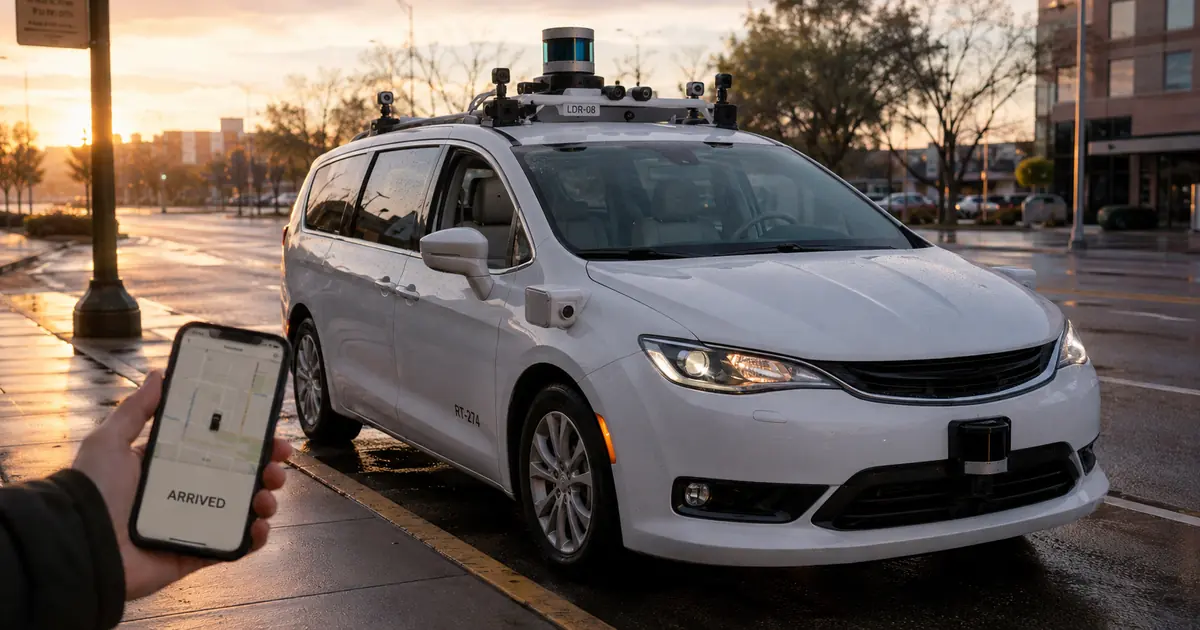
Until now, the only way to hail a Waymo robotaxi in Atlanta and Austin was through the Uber app. That exclusivity ends in early 2028, and Waymo launches its own app in the same cities. An Uber spokesperson put it this way to CNBC.
"But an Uber spokesperson told CNBC by email on Friday that, “We have been notified by Waymo that they intend to launch the Waymo app in Austin and Atlanta in January 2028, alongside their existing deployment with Uber.”" — CNBC
The word to notice is "alongside". Waymo is not leaving Uber. Through May 2028, the duration of the existing contract, hundreds of Waymo robotaxis stay available on Uber in both cities. On top of that, Uber gains the ability to put non-Waymo autonomous vehicles on its platform there. Side by side, the two look like this.
| Aspect | Via the Uber app | Via Waymo's own app |
|---|---|---|
| Cities | Atlanta and Austin | Atlanta and Austin |
| Timing | Through May 2028, while the existing contract runs | Launches January 2028 |
| Exclusivity | Ends in early 2028 | Runs in parallel once exclusivity ends |
| Vehicles available | Hundreds of Waymo robotaxis | Waymo robotaxis |
| Non-Waymo AVs | Can be added once exclusivity ends | Not applicable |
As the table shows, from January to May 2028 both cities have a window in which Waymo vehicles can be hailed from either app.
"In Atlanta and Austin, hundreds of Waymo robotaxis will remain available on Uber through at least May 2028, the duration of their existing contract, Uber said. The changes ahead allow the ride-hailing company to put other, non-Waymo autonomous vehicles onto its platform in both cities." — CNBC
Waymo's Own Explanation
Waymo frames the move around rider choice. Users need choice in how they experience this technology, according to the company's statement.
"A Waymo spokesperson said in an email that users need “choice in how they experience this technology.” “This is essential to the industry’s future and to our vision of making the Waymo app and the safety of our technology available to riders everywhere,” the spokesperson wrote." — CNBC
There is a track record behind it. Waymo has been able to attract riders in cities without exclusive Uber deals, and its robotaxis are already live in nine other markets. The service stands up without borrowing a ride-hailing app's reach, which is the plain reading.
"The development reflects how Waymo has been able to attract riders in a number U.S. cities without exclusive Uber deals, as its robotaxis are now live in nine other markets, according to the company's website." — CNBC
Handling the "Split" Report
Confirmed versus reported
Two items landed the same day, and they do not carry the same weight.
The Internally Discussed Split
The Financial Times reported that Waymo held internal discussions about whether to split from Uber. The tensions cited include conflicting policy proposals the two companies are pursuing in different US markets.
"The Financial Times reported on Friday that Waymo held internal discussions about whether it should split from Uber due to tensions between the two companies, including around conflicting policy proposals the companies are pursuing in different U.S. markets." — Financial Times reporting, relayed by CNBC
What CNBC states goes as far as the two pursuing conflicting policy proposals in different markets. When the party that owns the vehicles and the party that owns the app want different rules, that is where interests diverge. On how US AI regulation is moving state by state, see our explainer on the Colorado AI Act.
The split discussions themselves remain reporting, not something either company has confirmed. The market reacted quickly regardless, with Uber shares falling more than 4%.
"Uber shares dropped more than 4% on the news." — CNBC
What Uber Has Lined Up
Uber has not been standing still. The company has kept investing in autonomous driving technology and has committed to buying vehicles from partners including the startups Waabi, Wayve, and Nuro, as well as the EV maker Rivian, once their self-driving cars are validated as safe to operate without a human supervisor or driver on board.
"Independent of Waymo, Uber has been investing in AV technology, and has committed to buying vehicles from some of its partners, including startups Waabi, Wayve and Nuro, as well as electric vehicle maker Rivian, after their self-driving cars are validated as safe to operate without a human supervisor or driver on board." — CNBC
Waymo, for its part, struck a deal last year with the ride-hailing company Lyft to run robotaxis in Nashville, Tennessee, on a non-exclusive basis. Working with several partners in parallel, rather than locking one in, is becoming the industry norm.
"Last year, Waymo also struck a deal with Lyft to offer robotoaxi rides in Nashville, Tennessee, on a non-exclusive basis." — CNBC ("robotoaxi" in the original appears to be a typo for robotaxi)
Delivering a service directly rather than through an intermediary app rhymes with how AI companies want their own front door. On how the major generative AI products differ in delivery, see our comparison of the main generative AI services.
What It Means for the Robotaxi Market
Two currents
This is less a dispute between two companies than one frame in the industry changing shape.
Lock-In Stops Working
When autonomous driving was still proving itself, borrowing a ride-hailing app's reach mattered a great deal. Once the technology holds up in service and riders come on their own, the need for exclusivity as protection thins out. Waymo running in nine markets without exclusive deals is the evidence.
The hailing side benefits from not being tied to one supplier either. Sourcing vehicles from several autonomous driving companies means supply does not hinge on one partner's decisions. Both sides had reasons to move away from exclusivity, which is the natural reading.
Hailing Directly From the Operator's App
The second current is autonomous driving companies taking riders directly through their own apps. Tesla, Amazon's Zoox, and other AV developers offer standalone apps that let riders hail robotaxis.
"Tesla, Amazon's Zoox and other AV developers are also offering standalone apps that allow riders to hail robotaxis." — CNBC
Companies that own AI-driven vehicles are taking ownership of the booking channel as well, and Waymo's decision sits inside that current. A company with the technology reaches the user directly, skipping the intermediary. The same shape shows up in generative AI. On AI moving into physical machinery, see the Claude robot control experiment.
Conclusion
What is settled is that Uber exclusivity in Atlanta and Austin ends in early 2028 and Waymo launches its own app. Waymo does not disappear from Uber; both remain hailable through May 2028, while the existing contract runs.
The claim that a full split was discussed internally is Financial Times reporting, not something either company has confirmed. Keeping settled facts and reporting apart makes this easy to follow. Autonomous driving has reached the point where riders come without lock-in, and this move marks that.
When you follow the original English coverage, a tool that turns a web page into something readable helps.