The four conditions that matter for storing wine
Boil the conditions down and they come to one thing: keep wine away from what makes it deteriorate. There are four causes, temperature, humidity, light, and vibration, plus odor.
The four storage conditions
Aim for 13 to 15 degrees, and keep it steady
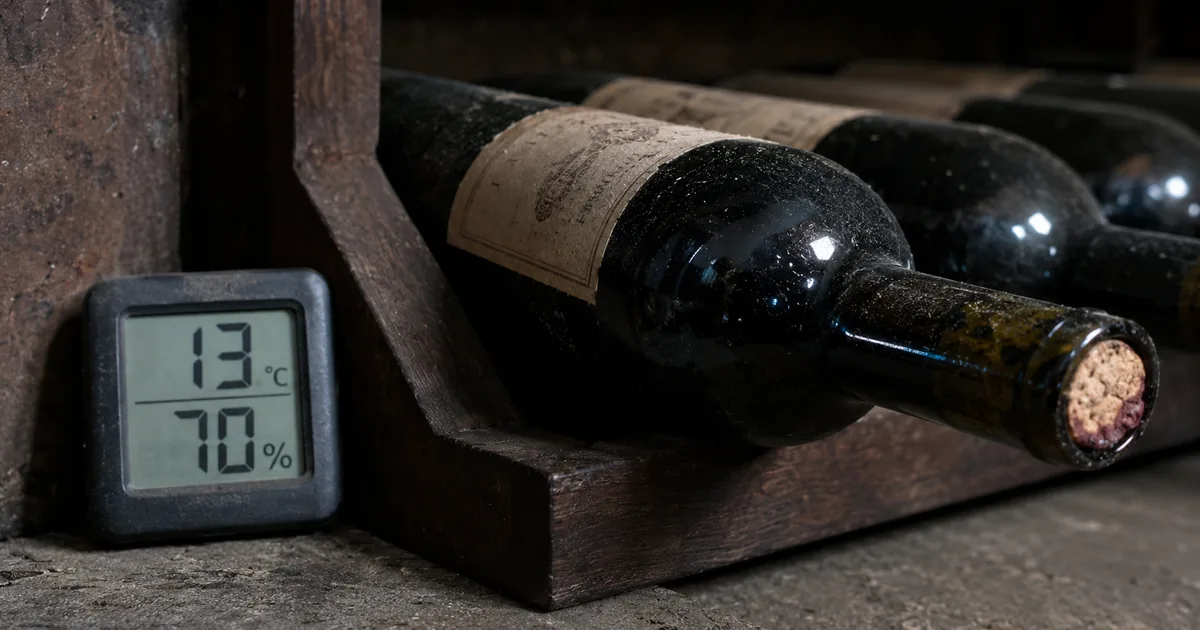
The guide figure is 13 to 15 degrees Celsius. Kirin describes a relatively cool place with little temperature variation at 13 to 15 degrees as optimal, and states that locations with high temperatures cause wine to deteriorate.
What actually bites is the swing rather than the absolute value. Compare a spot that sits at 18 degrees permanently with one that travels between 10 and 22 every day. The averages may match, but the second is far harder on the bottle. A shelf in a sunny room or a spot near the stove can have a low average and still swing widely across the day.
Note that these 13 to 15 degrees are storage temperatures, a separate figure from the temperature you pour at. What to set a cellar to, and how to reconcile that with the different serving temperatures for red, white, and sparkling, is covered in "What Temperature Should a Wine Cellar Be? Storage Versus Serving."
A relatively cool place with little temperature variation, at 13 to 15 degrees, is optimal. Locations with high temperatures cause wine to deteriorate.
A relatively cool place with little temperature variation, at 13 to 15 degrees, is optimal. Locations with high temperatures cause wine to deteriorate. — From the optimal wine storage techniques section
Hold humidity at 70 to 75 percent
Humidity should sit around 70 to 75 percent. Mottox lists four ideal storage conditions: 12 to 15 degrees Celsius, 70 to 75 percent humidity, no temperature swings or vibration, and no exposure to ultraviolet light.
Humidity matters because of the cork. In a dry spot the cork shrinks, a gap opens between it and the bottle, and air gets in. Japanese homes are humid in summer and dry in winter, so winter is when this tends to become a problem. Anywhere in the direct path of an air conditioner fails on both temperature and humidity at once.
The ideal storage conditions for wine are: (1) a temperature of 12 to 15 degrees Celsius, (2) humidity of 70 to 75 percent, (3) no temperature variation or vibration, and (4) no exposure to ultraviolet light.
The ideal storage conditions for wine are: (1) a temperature of 12 to 15 degrees Celsius, (2) humidity of 70 to 75 percent, (3) no temperature variation or vibration, and (4) no exposure to ultraviolet light. — From the explanation of storage conditions
Keep light, vibration, and odor away
The remaining three come down entirely to where you put the bottles. Suntory's official FAQ lists high temperature, low humidity, sunlight, and vibration as unfavorable for storing wine, and adds that storing wine somewhere with strong odors can transfer those odors into it.
That last one gets overlooked. A shed holding detergent or kerosene, or a pantry with pickles and dried goods, is a poor fit even when the temperature and humidity are right.
High temperatures, low humidity, sunlight, and vibration are all unfavorable for storing wine. In addition, storing wine in a location with strong odors can cause those odors to transfer into the wine.
As a general matter we cannot recommend long-term storage of wine at home, but if you do store it, please keep it in a cool, humid, dark place./High temperatures, low humidity, sunlight, and vibration are all unfavorable for storing wine. In addition, storing wine in a location with strong odors can cause those odors to transfer into the wine. — From the explanation of basic storage conditions
Whether a bottle lies down depends on the closure
"Wine should lie down" is widely known, but it does not apply to every bottle. The closure decides it.
Closure type and orientation
Cork-sealed bottles lie down
Stand a cork-sealed bottle upright and the cork sits away from the wine and dries out. Suntory explains that a cork shrinks as it dries, letting air into the bottle and risking oxidation, and asks that such bottles be stored lying down.
The point of lying a bottle down is to keep the cork wet with wine. The longer a bottle sits, the more drying time accumulates.
If the closure is a cork: a cork shrinks as it dries, letting air into the bottle and risking oxidation of the wine, so please store the bottle lying down.
If the closure is a cork: a cork shrinks as it dries, letting air into the bottle and risking oxidation of the wine, so please store the bottle lying down. — From the storage instructions for cork closures
Screw caps can stay upright
Screw-capped bottles are a different case. The same Suntory FAQ states explicitly that a screw cap does not need to be stored lying down. Lying a bottle down is a measure against cork drying, so with no cork the reason itself does not apply.
If you have been trying to lay everything down and running out of room, look at the closures first. Bottles you can stand upright change how many fit in the same space.
If the closure is a screw cap: there is no need to store the bottle lying down.
If the closure is a screw cap: there is no need to store the bottle lying down. — From the storage instructions for screw cap closures
Substituting for a cellar at home
Meeting every condition takes a cellar, but holding bottles for the few months before you drink them can be done inside the house.
To get through summer, use under-floor storage or a closet
For getting through summer, Suntory recommends under-floor storage or a closet, described as a dark, cool location with little temperature variation. Neither takes direct sunlight, and both are insulated from outside air.
Note, though, that the same official FAQ states that long-term storage at home is not recommended. A substitute is only ever a substitute. If the plan is to cellar bottles for years, the conditions fall short. For wine still years away from its window, that is the point to look at a cellar or an off-site storage service. How to think about drinking windows is covered in "When Is Wine Ready to Drink? How Aging Works and How to Decide to Drink or Cellar."
To get through the summer, we recommend placing bottles in under-floor storage, a closet, or another dark, cool location with little temperature variation.
As a general matter we cannot recommend long-term storage of wine at home, but if you do store it, please keep it in a cool, humid, dark place./To get through the summer, we recommend placing bottles in under-floor storage, a closet, or another dark, cool location with little temperature variation. — The first passage opens the answer; the second covers getting through summer
What to watch when using a refrigerator
If you use a refrigerator, the crisper drawer is the candidate, since it does not drop as cold as the main compartment. It was never designed for wine, so treat it as short-term parking.
Two things to watch: the temperature swings and vibration from opening the door, and the odors inside. As covered above, sharing a space with strongly scented food transfers those odors into the wine. Wrapping the bottle in newspaper or padding keeps it from sitting directly exposed to light and smells.
Once opened, refrigerate as a rule
The moment a bottle is opened, the conditions become a different problem. In an experiment Suntory ran in 2015 comparing room-temperature and refrigerated storage, almost no difference showed up through the first week. The clear difference came at two weeks, where the room-temperature bottle came across as spoiled.
The experiment concluded that once opened, wine should as a rule be kept refrigerated. It also found that you do not need to finish a bottle the day you open it: a casual wine keeps well for three days, a powerful one for a week.
★★ A casual wine keeps well for three days, a powerful one for a week! ★★
We tried room-temperature storage for the sake of this experiment, but once a bottle is opened we think it should as a rule be kept refrigerated./★★ A casual wine keeps well for three days, a powerful one for a week! ★★ — From the conclusions on storage method and change over time
Managing storage as the bottle count grows
Once the conditions are in place, a different problem appears as the count climbs: keeping track of where things are.
Pack it too tight and the back goes dormant
Buy a cellar and the temptation is to fill it to the brim. Manufacturers point out that stacking bottles in does not only make them harder to retrieve, it also undermines temperature control.
Stated capacity is not a promise either. Capacity figures are usually calculated against slim Bordeaux-shaped bottles, so a collection heavy on broad-shouldered Burgundy or Champagne bottles fills up short of the number on the box. If you are weighing a replacement, go by the count you actually loaded rather than the catalog. How to arrange bottles is covered in "Organizing a Wine Cellar: Shelf Zoning and Recording Position."
Stacking wine on top of other bottles lets you store more wine, but it not only makes the bottles harder to retrieve, it also makes storage at the appropriate temperature difficult.
Stacking wine on top of other bottles lets you store more wine, but it not only makes the bottles harder to retrieve, it also makes storage at the appropriate temperature difficult. — From "CHECK 02: is the capacity one that does not reduce cooling efficiency?"
The stated capacity of a wine cellar is usually based on Bordeaux-shaped bottles, so when you try to load wider bottles such as Burgundy or Champagne shapes, cases arise where it does not hold as many as the specification says. — From a specialist's remarks in the column
Record what is where
Even with everything in a spot that meets the conditions, not knowing what is where means opening the door every time you look. Every open and close moves the temperature inside. The longer you spend searching, the worse the storage conditions get.
How you record depends on the count. Up to a few dozen bottles a spreadsheet is enough, and the column design is covered in "Wine Inventory in Excel: Column Design and Where It Breaks." If you want to pin down which tier of which shelf a bottle is on, an app that reproduces your cellar shelves on screen fits better.
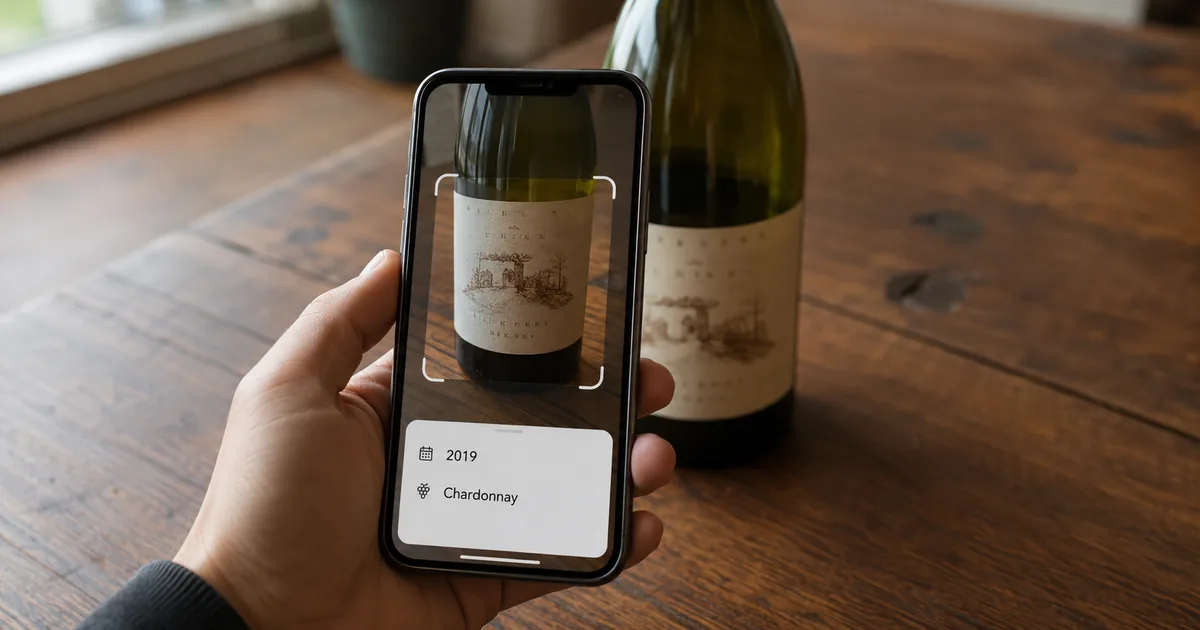
Shelvin, a wine inventory app, lets you register several cellars and keep a visual record of which wine sits on which tier of which shelf. You can register up to 16 bottles for free, and position management is available within that free tier. Differences between apps are covered in "Best Wine Inventory Apps Compared: Which Ones Track Shelf Position."
Register multiple cellars and visually record which wines are located on which shelf (row/tier).
Register multiple cellars and visually record which wines are located on which shelf (row/tier). — From the graphical cellar management description
Free ¥0 Up to 16 bottles Label scanning (up to 2 per week) Cellar position management Ads shown — From the Free plan entries under "Pricing"
Summary
Storing wine comes down to four things: 13 to 15 degrees Celsius, 70 to 75 percent humidity, no light or vibration, and no strong odors nearby. Choosing a spot that stays steady does more good than matching the numbers exactly.
Not every bottle needs to lie down. Cork shrinks as it dries, so cork-sealed bottles lie down, but manufacturers state that screw caps do not need to. If you are short on space, checking the closures on what you own changes how much room you need.
Without a cellar, under-floor storage or a closet will substitute. Since the manufacturer itself does not recommend long-term storage at home, though, wine that is years away from its window is past the point where a substitute holds. Once a bottle is opened, refrigerate it as a rule, and know that you do not have to finish it that day.
What remains after the conditions are handled is knowing what is where. The longer you search, the longer the door stays open and the more the temperature inside moves. If you want to record down to shelf position and cut the searching, starting from Shelvin (App Store), whose free tier already includes position management, also eases the load on the storage environment itself.